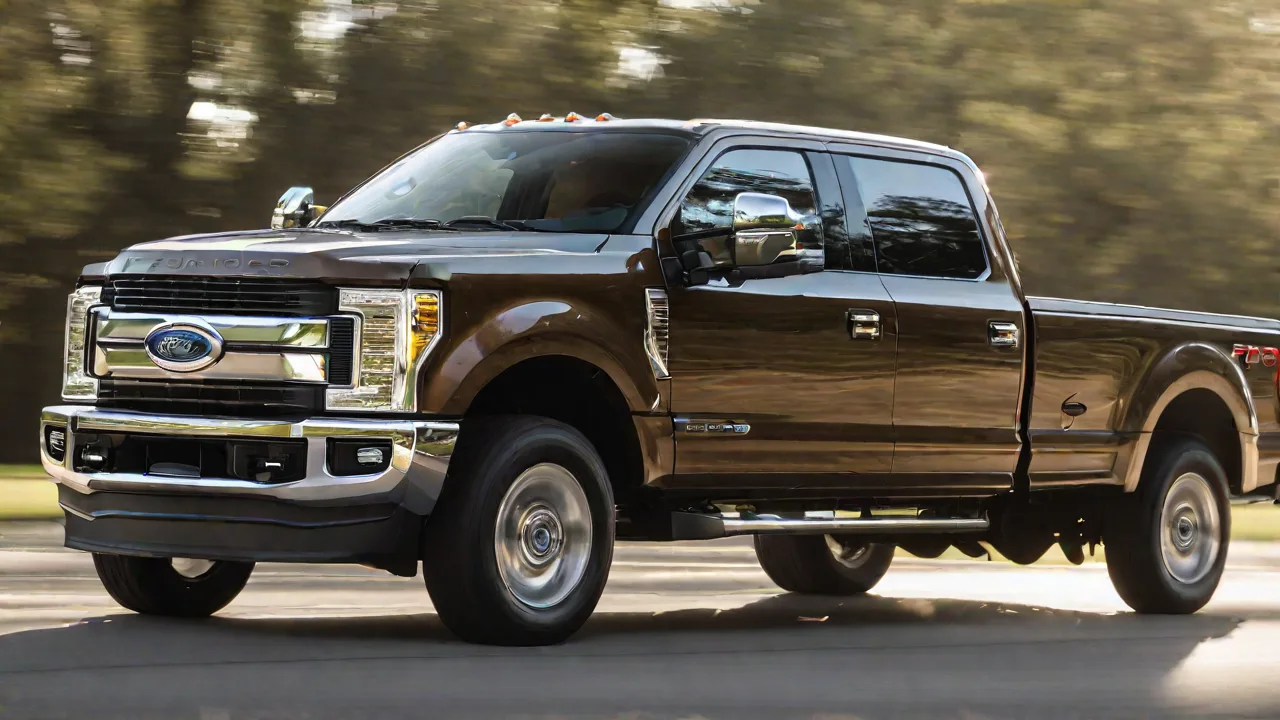
Everyday Ford F-250 vs. Everyday Ford F-350: Which Super Duty Truck Offers Better Value?
When it comes to heavy-duty trucks, the Ford Super Duty lineup stands out as a benchmark for power, durability, and versatility. Among the most popular models in this series are the Everyday Ford F-250 and the Everyday Ford F-350. Both trucks are engineered to tackle demanding tasks, whether you're hauling equipment to a worksite or towing recreational trailers. However, determining which model offers better value depends on understanding their distinct capabilities, features, and costs. This comprehensive comparison will guide you through the essential differences and help you choose the Super Duty truck that best fits your needs.
Performance and Powertrain Options
One of the primary considerations for heavy-duty truck buyers is engine performance. Both the F-250 and F-350 offer a range of powerful engines designed to deliver impressive torque and horsepower, essential for towing and heavy hauling.
Gasoline and Diesel Engines
- 7.3L V8 Gasoline Engine: This naturally aspirated V8 is known for its rugged reliability and strong low-end torque. Producing up to 430 horsepower and 475 lb-ft of torque, it offers excellent performance for daily driving and moderate towing tasks.
- 6.7L Power Stroke V8 Turbo Diesel: The diesel engine is a standout for its exceptional torque output, generating up to 1,050 lb-ft in certain configurations. This makes it ideal for heavy towing and sustained highway performance. The turbocharged design also improves fuel efficiency under load compared to older diesel models.
- 6.2L V8 Gasoline Engine: Available in some trims, this engine is a solid choice for those who want a balance of power and affordability without stepping up to the larger 7.3L V8.
Transmission and Drivetrain Options
Both trucks come equipped with a TorqShift 10-speed automatic transmission, which provides smooth shifting and precise control over power delivery. Additionally, buyers can choose between two-wheel drive (2WD) and four-wheel drive (4WD) options, depending on the intended use and driving conditions.
Towing Capability
Towing capacity is often the defining factor between the F-250 and F-350 models. While both trucks are engineered to tow heavy loads, the F-350 generally offers superior towing performance due to several key factors.
Maximum Towing Capacities
- F-250: Depending on the engine and configuration, the F-250 can tow up to approximately 20,000 pounds when properly equipped. This makes it suitable for a wide range of recreational and professional towing tasks.
- F-350: With its heavier-duty components and available dual rear wheels, the F-350 can tow up to 35,750 pounds in certain configurations. This significant increase is a major advantage for those needing to haul large trailers, horse trailers, or heavy equipment.
Dually Option and Stability
The F-350 offers the option of dual rear wheels, commonly referred to as a "dually," which provides increased stability and weight distribution when towing extremely heavy loads. This feature reduces trailer sway and enhances overall safety during transport. In contrast, the F-250 is limited to single rear wheels, which are lighter and easier to maintain but less suitable for the heaviest towing demands.
Payload Capacity and Durability
Beyond towing, payload capacity—the amount of weight a truck can carry in its bed—is a critical performance metric for many users. The F-350 holds an advantage in this area as well, thanks to its robust build and suspension upgrades.
Payload Ratings
- F-250: The maximum payload capacity typically ranges from around 3,200 to 4,300 pounds, depending on the cab style and bed length. This is sufficient for most general hauling tasks, from construction materials to landscaping equipment.
- F-350: Thanks to reinforced suspension components, a stronger frame, and upgraded axles, the F-350 can handle payloads exceeding 7,000 pounds in some configurations. This makes it especially well-suited for contractors and businesses that regularly transport heavy tools or materials.
Suspension and Frame Enhancements
The F-350 benefits from heavy-duty suspension tuning and stronger frame materials, designed to withstand repeated stress and heavy loads. This enhances durability over the long term, reducing wear and tear in demanding work environments. The F-250’s suspension is also durable but optimized more for versatility and everyday driving comfort.
Dimensions and Maneuverability
While power and capacity are vital, the physical size and maneuverability of the truck play a significant role in daily usability, especially in urban or suburban settings.
Size Differences
- F-250: Generally more compact and lighter, the F-250’s smaller footprint makes it easier to navigate tight spaces, parking lots, and narrower roads. This is a distinct advantage for drivers who use their truck both on job sites and as a daily driver.
- F-350: The F-350 is larger and heavier, particularly with the dually setup, which can add significant width and length. While this enhances stability under heavy loads, it can make parking and maneuvering in confined spaces more challenging.
Turning Radius and Handling
The F-250’s smaller size contributes to a tighter turning radius and generally more agile handling. This is particularly beneficial for drivers who frequently operate in city environments or on congested job sites. The F-350’s heavier components and wider stance, while improving towing stability, slightly reduce agility.
Interior Comfort and Technology
Both the F-250 and F-350 offer a range of trim levels, from basic work trucks to luxurious, fully loaded models. The interiors are designed with durability in mind, yet still provide modern comfort and technology options.
Cab Configurations
- Regular Cab: Offers seating for up to three, ideal for work-focused use with maximum bed length.
- SuperCab: Adds rear-hinged doors and additional space for passengers or storage.
- SuperCrew: Features four full-size doors and spacious rear seating, making the truck more family-friendly or suitable for crews.
Technology Features
Both trucks can be equipped with the latest Ford infotainment systems featuring large touchscreen displays, smartphone integration via Apple CarPlay and Android Auto, navigation, and premium audio options. Advanced safety features such as adaptive cruise control, blind-spot monitoring, lane-keeping assist, and trailer sway control are available to enhance driver confidence and convenience.
Cost Considerations
Budget is often a decisive factor when choosing between the F-250 and F-350. While both trucks represent significant investments, there are notable differences in upfront costs and ongoing expenses.
Purchase Price
- F-250: Generally more affordable, with base models offering excellent value for those who need strong performance without extra heavy-duty features. Pricing tends to start lower than the F-350 by several thousand dollars, depending on trim and options.
- F-350: The enhanced capabilities and optional features, such as dual rear wheels, contribute to a higher starting price. However, for buyers who truly require the additional towing and payload capacity, this investment can be justified by the truck’s superior performance.
Maintenance and Operating Costs
Operating a heavier-duty truck like the F-350 can lead to increased maintenance costs, partly due to the more complex rear axle setup and the added wear from heavier loads. Tire replacement, especially for dually configurations, can also be more expensive. Fuel economy tends to be slightly lower in the F-350, although both trucks are in the same class and vary mainly based on engine choice and load.
Use Case Scenarios: Which Truck Fits Your Needs?
Understanding how each truck fits into different work and lifestyle scenarios can clarify which offers better value for you.
Everyday Work and Light Towing
If your routine involves moderate towing, occasional hauling, and daily driving around town or job sites, the F-250’s blend of power, maneuverability, and lower cost makes it an excellent choice. It provides ample capability for most construction work, landscaping, and recreational towing without the added bulk of the F-350.
Heavy-Duty Towing and Payload Demands
For users who routinely tow heavy trailers, such as large fifth-wheel RVs, horse trailers, or commercial equipment, the F-350’s enhanced towing capacity and payload abilities are essential. Its dually option ensures better stability and safety when hauling maximum loads, making it a preferred choice for demanding professional applications.
Commercial and Fleet Use
Businesses that require dependable work trucks for heavy lifting and towing often find the F-350 to be a more cost-effective investment over time due to reduced downtime and higher durability. However, if the workload is lighter or more varied, the F-250 may be more than sufficient and offer better fuel efficiency and lower operating costs.
Key Differences at a Glance
- Towing Capacity: The F-350 surpasses the F-250 significantly, especially when equipped with the dually rear wheels, reaching up to 35,750 pounds.
- Payload Capacity: The F-350 can carry heavier loads, with payloads exceeding 7,000 pounds, compared to the F-250’s maximum of around 4,300 pounds.
- Cost: The F-250 is generally more budget-friendly both in terms of purchase price and maintenance expenses.
- Size and Maneuverability: The F-250’s smaller size makes it easier to drive and park in tight urban or suburban settings.
- Durability: The F-350 features reinforced suspension and chassis upgrades designed for long-term heavy-duty use.
- Cab and Comfort Options: Both trucks offer similar interior configurations and technology, though the F-350’s larger frame can accommodate heavier-duty features.
Conclusion: Making the Right Choice
Choosing between the Everyday Ford F-250 and F-350 ultimately hinges on your specific needs and priorities. If you require maximum towing and payload capabilities for heavy commercial work or frequent hauling of large trailers, the F-350 offers unmatched value through its enhanced powertrain, chassis strength, and optional dually configuration. Conversely, if your daily driving includes light to moderate towing and hauling, and you favor lower initial and maintenance costs combined with easier maneuverability, the F-250 provides a compelling balance of performance and affordability.
Both trucks uphold Ford’s reputation for durability and innovation, so you can be confident in your choice regardless of which model you select. Assess your typical workloads, budget constraints, and driving environments carefully to determine which Super Duty truck will best serve you today and in the years to come.