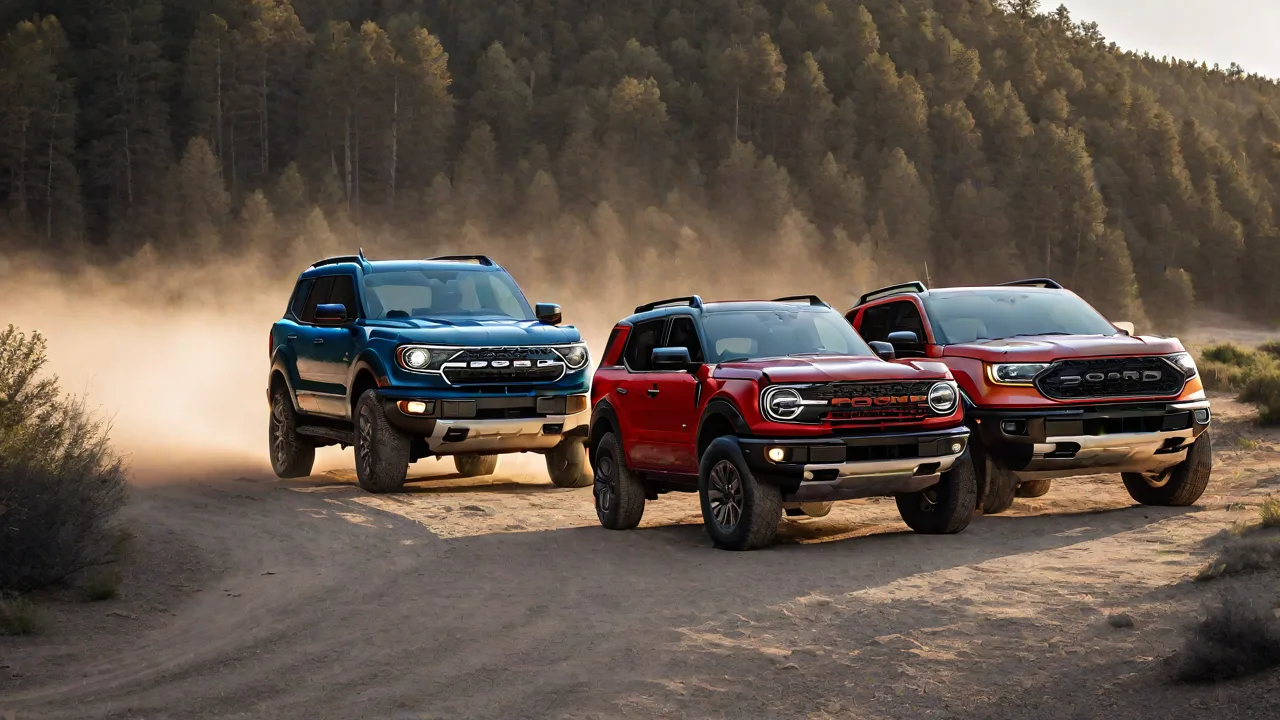
Everyday Ford Bronco Sport vs. Everyday Ford Ranger: Best Choice for Off-Road Enthusiasts
For outdoor enthusiasts seeking a vehicle that excels beyond the pavement, the Everyday Ford Bronco Sport and the Everyday Ford Ranger stand out as two of the most capable choices in the midsize off-road segment. Each brings a distinct set of strengths that cater to different adventure styles, whether you’re navigating tight, rocky trails or hauling gear to your favorite camping spot. Understanding the key differences in performance, design, technology, and versatility will help you determine which truck is the best fit for your off-road lifestyle.
Performance and Off-Road Capability
When it comes to conquering rugged terrain, both the Bronco Sport and Ranger demonstrate impressive capability, but they approach off-roading from unique angles.
Everyday Ford Bronco Sport: Trail-Focused Agility
The Bronco Sport is purpose-built for off-road exploration, combining compact dimensions with advanced terrain management systems. Standard all-wheel drive and available 4x4 options provide confident traction on dirt, mud, sand, or snow. The highlight is the available G.O.A.T. Modes—Goes Over Any Terrain—offered in seven different settings such as Normal, Eco, Sport, Slippery, Sand, Baja, and Mud/Ruts. These modes electronically adjust throttle response, transmission shifts, and traction control to optimize vehicle performance on specific surfaces.
Its off-road hardware includes features like:
- Trail Control, a low-speed cruise control system that helps maintain steady speeds on challenging trails
- Skid plates to protect vital underbody components
- Good ground clearance (8.8 inches) and short overhangs for better approach and departure angles
- Standard all-terrain tires designed for grip and durability
Under the hood, the Bronco Sport typically comes with a turbocharged 1.5-liter three-cylinder engine delivering around 181 horsepower and 190 lb-ft of torque, with an available 2.0-liter turbocharged four-cylinder option boosting power to 245 horsepower and 275 lb-ft of torque. While not the most powerful engine in its class, the focus is on providing efficient, responsive off-road performance combined with good fuel economy.
Everyday Ford Ranger: A Versatile Workhorse
The Ranger, as a midsize pickup truck, offers a more traditional truck experience, balancing off-road capability with towing and hauling prowess. It comes standard with rear-wheel drive, with an available part-time four-wheel-drive system that includes electronic shift-on-the-fly for engaging 4WD High or Low ranges. This makes it equally adept for rugged trail use or everyday driving.
Key off-road features include:
- Electronic-locking rear differential to improve traction on slippery surfaces
- Terrain Management System with selectable drive modes such as Normal, Grass/Gravel/Snow, Mud/Ruts, and Sand
- Skid plates for underbody protection
- Optional FX4 off-road package adding off-road-tuned suspension, hill descent control, and all-terrain tires
Powering the Ranger is a robust 2.3-liter EcoBoost turbocharged inline-four engine producing 270 horsepower and 310 lb-ft of torque, making it one of the more powerful engines available in the midsize truck segment. This engine, paired with a 10-speed automatic transmission, delivers strong acceleration, excellent towing capacity (up to 7,500 pounds when properly equipped), and sufficient low-end torque to tackle steep inclines and challenging terrain.
Ground clearance for the Ranger is competitive, with approximately 8.9 inches on FX4 models, and the truck's longer wheelbase and body provide stability on rough surfaces, though its larger size may limit maneuverability on narrow trails compared to the Bronco Sport.
Interior and Comfort
While off-road performance is critical, the everyday usability of your vehicle also matters, especially if you spend long hours driving to trailheads or camping sites. Both the Bronco Sport and Ranger deliver interiors designed to blend comfort, utility, and technology.
Bronco Sport Cabin: Durable and Functional
The Bronco Sport’s interior is designed with adventure in mind, featuring rugged yet refined materials that withstand dirt and moisture. Water-repellent cloth seats and rubberized flooring options make cleaning after a muddy trail simple. The cabin layout emphasizes practicality, with ample cubbies, under-seat storage, and a configurable cargo area that can be expanded by folding the rear seats flat.
Technology is well integrated, with a standard 8-inch touchscreen infotainment system compatible with Apple CarPlay and Android Auto. Available features include a Bang & Olufsen premium audio system, wireless charging pad, and Ford’s SYNC 3 voice-activated controls, all designed to keep you connected while maintaining focus on the trail.
Seating space is cozy but comfortable, with seating for five passengers. The Bronco Sport’s compact size makes it easy to park in city environments yet still spacious enough for weekend gear.
Ranger Interior: Spacious and Versatile
The Ranger prioritizes passenger comfort and utility, offering a larger cabin with more legroom and headroom, especially in SuperCrew configurations. The seats are supportive and designed for longer drives, with available leather-trimmed options for added luxury. The interior uses durable materials but with an emphasis on a more traditional truck aesthetic, featuring hard plastics and metal accents.
Technology offerings include a standard 8-inch or available 10.1-inch touchscreen with SYNC 4 infotainment, Apple CarPlay, Android Auto, and optional navigation. The Ranger also offers a suite of driver-assist features such as adaptive cruise control, lane-keeping assist, and blind-spot monitoring, enhancing safety on and off the road.
The truck bed adds significant cargo capacity, with tie-downs and bed liner options available, making it ideal for hauling larger equipment, firewood, or dirt bikes. This makes the Ranger particularly attractive for those who need a multi-purpose vehicle that supports both work and recreational activities.
Fuel Economy and Practicality
Fuel efficiency is often a consideration for adventure seekers who may take their vehicles on long journeys to remote locations.
The Bronco Sport’s smaller engines and lighter weight generally provide better fuel economy, with EPA estimates around 24-28 mpg combined depending on the engine and drivetrain configuration. This makes it a practical choice for those who want an off-road-capable vehicle without frequent fuel stops.
The Ranger’s more powerful 2.3-liter EcoBoost engine, while efficient for its class, typically delivers combined mileage in the low 20s mpg range. The added power and towing capacity come with a slight trade-off in fuel economy, but this is balanced by the truck’s versatility and capability.
Safety and Driver Assistance Features
Modern off-road vehicles must also deliver safety and convenience features to protect occupants and reduce driver fatigue.
- Bronco Sport: Comes equipped with Ford Co-Pilot360, including automatic emergency braking with pedestrian detection, blind-spot monitoring, rear cross-traffic alert, lane-keeping assist, and a rearview camera. Optional adaptive cruise control and evasive steering assist further enhance safety on highways and trails.
- Ranger: Also features Ford Co-Pilot360, with similar standard safety tech. Higher trims add features like adaptive cruise, forward collision warning with brake support, lane departure warning, and a 360-degree camera system for enhanced visibility in tight off-road situations.
Customization and Accessories
Both vehicles offer a range of OEM accessories and packages to suit specific off-road needs.
- Bronco Sport: Available Sasquatch Package adds 17-inch beadlock-capable wheels, 33-inch all-terrain tires, Bilstein shocks, front and rear locking differentials, and increased ground clearance. Additional accessories include roof racks, off-road lighting, and protective skid plates.
- Ranger: FX4 Off-Road Package enhances suspension, adds skid plates, all-terrain tires, and hill descent control. Ford Performance offers aftermarket parts for suspension lifts, off-road bumpers, and bed-mounted storage solutions.
Which Should You Choose?
Choosing between the Everyday Ford Bronco Sport and Everyday Ford Ranger ultimately depends on your specific priorities and how you plan to use the vehicle.
- Choose the Bronco Sport if: You want a compact, nimble SUV with advanced off-road technology designed for trail running and weekend adventures. It excels in tight, technical terrain and offers modern styling with practical interior features tailored to active lifestyles. Its better fuel economy and easier urban maneuverability make it a versatile daily driver as well.
- Choose the Ranger if: You require a midsize truck that balances off-road capability with strong towing and hauling performance. The Ranger is ideal if you frequently need to transport larger gear, tow trailers, or use your vehicle for work and play. It offers more interior space, powerful engine options, and rugged durability suited to heavier-duty tasks while still providing competent off-road performance.
Conclusion: Tailor Your Adventure Vehicle to Your Lifestyle
Both the Everyday Ford Bronco Sport and Everyday Ford Ranger represent excellent choices for off-road enthusiasts, each with its unique advantages. The Bronco Sport’s focus on trail-ready agility and technology makes it a standout option for those who value compactness and specialized off-road features. The Ranger’s powerful engine, versatility, and truck bed utility appeal to adventurers who need their vehicle to double as a capable workhorse.
Consider your typical off-road routes, cargo needs, passenger space requirements, and daily driving habits when making your decision. Test driving both vehicles on and off the road can provide valuable insight into which model aligns best with your adventure goals. With either choice, you’re equipped to explore the outdoors with confidence and style.