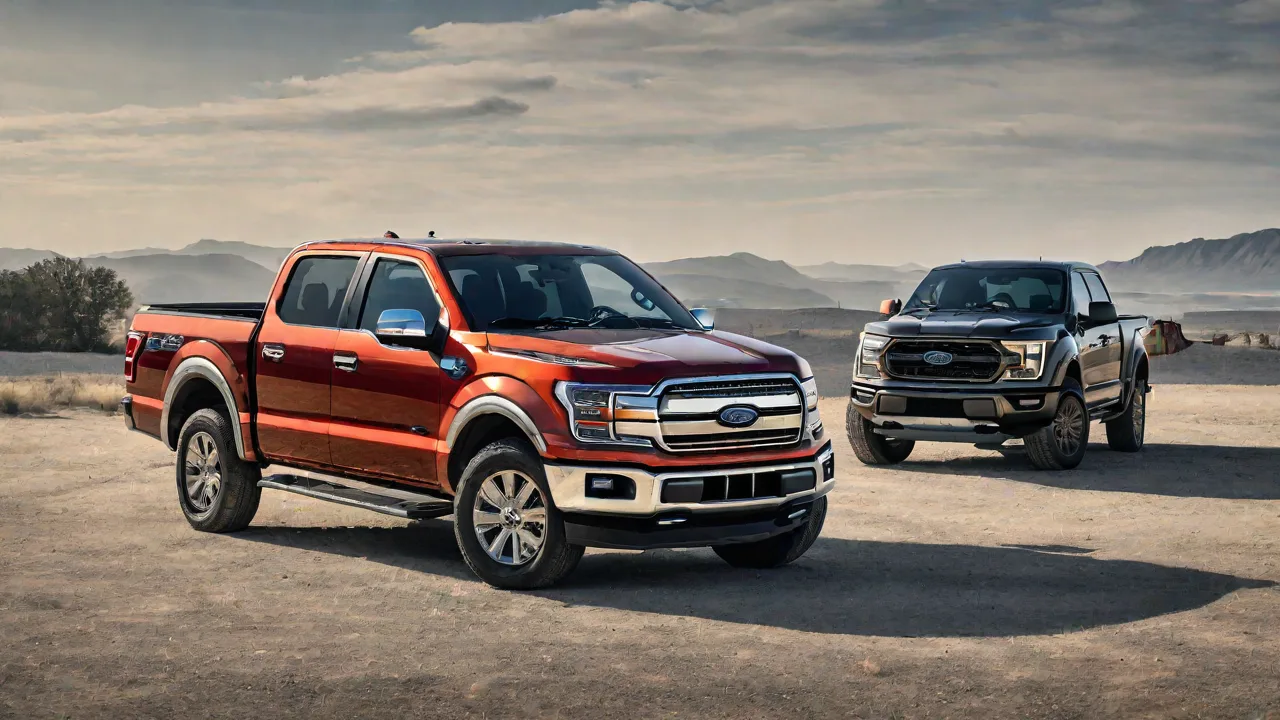
Everyday Ford F-150 vs. Everyday Ford Ranger: Maintenance Costs Compared Over 5 Years
When deciding between a new pickup truck, it’s essential to consider not just the purchase price but also the long-term maintenance and repair costs. The Ford F-150 and Ford Ranger are two of the most popular models in Ford’s truck lineup, each catering to different needs and preferences. By closely examining the maintenance expenses over a five-year ownership period, potential buyers can make a more informed choice that balances capability with cost-effectiveness.
Overview of the Ford F-150 and Ford Ranger
The Ford F-150 is a full-size pickup truck known for its robust performance, high towing and payload capacities, and a wide range of configurations. It has been America’s best-selling vehicle for decades, favored by those who need a workhorse capable of handling heavy-duty tasks and off-road adventures. The F-150 offers various engine options, including V6, V8, and turbocharged EcoBoost variants, which contribute to its versatility but also impact maintenance complexity.
On the other hand, the Ford Ranger is a mid-size pickup designed for buyers who want a smaller, more maneuverable truck with respectable performance and efficiency. It appeals to urban drivers, weekend adventurers, and those who require a capable vehicle without the bulk of a full-size truck. The Ranger typically comes with a four-cylinder turbocharged engine, which is more fuel-efficient and generally less expensive to maintain than the larger engines in the F-150.
Routine Maintenance Costs
Routine maintenance is the foundation of vehicle longevity and reliability. Both the F-150 and Ranger require regular services such as oil changes, brake inspections, tire rotations, fluid top-offs, and filter replacements. However, there are notable differences in the costs associated with these services due to size, engine complexity, and parts pricing.
Oil Changes and Fluids
- Ford F-150: Depending on the engine type, oil changes for the F-150 can range between $60 and $100 per service. Full synthetic oil is often recommended for the EcoBoost engines and larger V8s, which increases cost. Additionally, larger engines require more oil volume, contributing to higher expenses.
- Ford Ranger: The Ranger’s smaller 2.3L EcoBoost four-cylinder typically uses less oil and synthetic blends, resulting in oil change costs between $40 and $70. This lower cost is appealing for budget-conscious owners.
Brake Maintenance
Brake pad and rotor wear depend heavily on driving habits and terrain. However, the F-150’s heavier curb weight means brakes tend to experience more stress, leading to more frequent replacements.
- F-150: Brake pad replacements average between $250 and $400 per axle, with rotor replacements adding $150 to $300 per axle. Routine brake inspections and fluid flushes add to overall maintenance but ensure safety and performance.
- Ranger: Brake services generally cost 10-20% less, with pad replacements ranging from $200 to $350, and rotors at $100 to $250. The lighter chassis reduces wear and tear on braking components.
Tire Rotations and Replacements
Both trucks benefit from regular tire rotations every 5,000 to 7,000 miles to promote even wear. Tire size and type influence replacement costs significantly.
- F-150: Typically equipped with larger tires (17 to 20 inches), tire rotations cost around $20 to $40 per service, while new tires can range from $150 to $300 each depending on brand and off-road capability.
- Ranger: With smaller 16 to 18-inch tires, rotations cost $15 to $35, and replacement tires are often cheaper, averaging $120 to $250 each.
Other Scheduled Services
Both trucks require periodic replacement of air filters, cabin filters, spark plugs, and transmission fluid. The F-150’s larger engines and more complex systems, like advanced 10-speed transmissions, can drive these service costs slightly higher.
- Air and Cabin Filters: Approximately $50-$100 for each replacement on the F-150, while the Ranger’s smaller filters cost around $40-$80.
- Spark Plugs: The F-150’s V6 and V8 engines often have more spark plugs, leading to replacement costs of $150-$300, compared to $100-$200 for the Ranger’s four-cylinder engine.
- Transmission Fluid Service: The F-150’s transmission service can range from $250 to $450, reflecting the complexity and fluid volume, whereas the Ranger’s transmission service is typically $200 to $400.
Common Repairs and Their Costs Over Five Years
Even with diligent maintenance, repairs can arise due to wear, accidents, or component failures. Understanding typical repair costs helps owners anticipate expenses and budget accordingly.
Brake System Repairs
Beyond routine pad and rotor replacements, brake system repairs may include caliper replacements, brake line repairs, or ABS system fixes.
- F-150: Repair costs can range from $300 to $600 depending on severity, parts needed, and labor. The F-150’s heavier components and larger brake systems contribute to higher parts costs.
- Ranger: Repairs typically cost between $250 and $500, with fewer complex components and smaller brakes making repairs less expensive.
Suspension Repairs
Suspension components like shocks, struts, ball joints, and control arms wear with use and terrain type. The F-150’s suspension is designed to handle greater loads, which can mean more costly parts and labor.
- F-150: Suspension repairs average $400 to $800. Heavy-duty suspension setups and optional off-road packages may increase complexity and cost.
- Ranger: Suspension repairs usually fall between $350 and $700, reflecting simpler suspension geometry and lighter loads.
Transmission Service and Repairs
Transmission reliability is vital for any pickup truck. Both the F-150 and Ranger use advanced automatic transmissions, but the F-150’s larger 10-speed transmission can be more expensive to service or repair.
- F-150: Routine transmission fluid changes cost between $250 and $450. Repair costs for transmission failures can escalate significantly, often exceeding $3,000, but such failures are rare with proper maintenance.
- Ranger: Fluid changes cost $200 to $400. Transmission repairs, if needed, tend to be less expensive due to the smaller transmission size and fewer gears.
Engine Repairs and Diagnostics
Both trucks come with modern, reliable engines, but complexity and size influence repair costs.
- F-150: Larger engines with turbochargers and advanced fuel systems may need more expensive diagnostics and repairs, especially if components like turbochargers or direct injection systems require service. Minor repairs can range from $300 to $1,200 depending on the issue.
- Ranger: The 2.3L turbocharged engine is generally reliable and less costly to repair. Minor engine repairs or diagnostics typically run from $200 to $900.
Fuel Efficiency’s Role in Maintenance Costs
Fuel efficiency, while not a direct maintenance expense, influences the overall cost of ownership. Better fuel economy can reduce engine strain, potentially lowering the frequency of certain repairs and maintenance.
- Ford F-150: Fuel economy varies by engine, but averages between 17 and 24 MPG combined. Lower fuel efficiency means more frequent refueling, and potentially more engine wear over time due to heavier loads and more aggressive driving conditions.
- Ford Ranger: Typically achieves 21 to 26 MPG combined, thanks to its smaller engine and lighter weight. This greater efficiency can reduce engine wear and associated maintenance costs over time.
Moreover, improved fuel economy means less environmental impact and more savings on fuel, which can be significant over thousands of miles driven annually.
Warranty Coverage and Service Plans
Both the Ford F-150 and Ranger come with comprehensive warranty coverage that can help offset repair costs during the initial years of ownership.
- Basic Warranty: Ford offers a 3-year/36,000-mile bumper-to-bumper warranty for both models, covering most repairs and defects.
- Powertrain Warranty: A 5-year/60,000-mile powertrain warranty covers the engine, transmission, and drivetrain components, which can significantly reduce unexpected expenses.
- Maintenance Plans: Ford often provides optional prepaid maintenance plans that cover routine services at discounted rates. These plans can be particularly beneficial for F-150 owners due to higher routine service costs.
Factors Influencing Maintenance Costs
While the data presented reflects average costs, individual maintenance expenses can vary widely based on several factors:
- Driving Habits: Aggressive driving, frequent towing, and off-road use accelerate component wear and increase maintenance frequency.
- Environment: Harsh climates, road salt exposure, and dusty conditions demand more frequent servicing.
- Vehicle Configuration: Options such as four-wheel drive, off-road packages, and larger engines add complexity and cost to maintenance.
- Maintenance Adherence: Regularly following the manufacturer’s maintenance schedule helps prevent costly repairs and preserves vehicle reliability.
Summary: Which Truck Is More Cost-Effective Over Five Years?
Overall, the Ford Ranger offers a more budget-friendly ownership experience when it comes to maintenance and repairs. Its smaller size, simpler mechanical components, and better fuel efficiency contribute to lower routine service costs and fewer expensive repairs. For drivers who primarily use their truck for light-duty tasks, commuting, and occasional hauling, the Ranger is a practical and economical choice.
Conversely, the Ford F-150 commands higher maintenance expenses due to its full-size frame, larger engines, and advanced features. However, for owners who require superior towing capacity, maximum payload, and a wide range of engine and trim options, the F-150’s versatility and power justify the increased upkeep. Many F-150 owners find the truck’s reliability and capability outweigh the additional costs, especially when coupled with proactive maintenance.
Making the Right Choice for Your Needs
Choosing between the Everyday Ford F-150 and Ford Ranger depends on balancing capabilities with operating costs:
- Choose the Ford Ranger if: You prioritize lower maintenance costs, better fuel efficiency, and a smaller vehicle footprint, and you don’t need the extreme towing or payload capacities of a full-size truck.
- Choose the Ford F-150 if: You require heavy-duty performance, maximum towing and payload ability, and are willing to invest more in maintenance to ensure reliability for demanding tasks.
Ultimately, both trucks are built to deliver dependable service with proper care. By understanding the maintenance and repair cost differences, buyers can select the model that aligns best with their lifestyle and budget.
Additional Tips for Reducing Maintenance Costs
Regardless of which truck you choose, following these best practices can help minimize maintenance expenses over the life of your vehicle:
- Stick to the Manufacturer’s Maintenance Schedule: Timely oil changes, filter replacements, and inspections prevent premature wear and major repairs.
- Use Quality Parts and Fluids: Genuine Ford parts and recommended synthetic oils ensure optimal performance and longevity.
- Practice Gentle Driving: Avoid aggressive acceleration, sudden braking, and overloading to reduce strain on mechanical components.
- Regularly Inspect Tires and Suspension: Proper tire pressure and alignment reduce uneven wear and improve fuel economy.
- Consider Extended Warranty or Service Plans: These can provide financial peace of mind and predictable maintenance costs.
Conclusion
When comparing the Everyday Ford F-150 and Ford Ranger, maintenance and repair costs over five years are an important consideration. The Ranger’s smaller size and simpler mechanics generally result in lower ownership expenses, making it a cost-effective choice for many truck buyers. Meanwhile, the F-150 offers unmatched capability and versatility at a premium, which can be worthwhile for those who need its full-size advantages.
By carefully evaluating your usage needs, budget constraints, and willingness to invest in maintenance, you can confidently select the truck that best fits your lifestyle while managing long-term costs effectively.